
Currently Empty: €0.00
Places to visit
Custom House
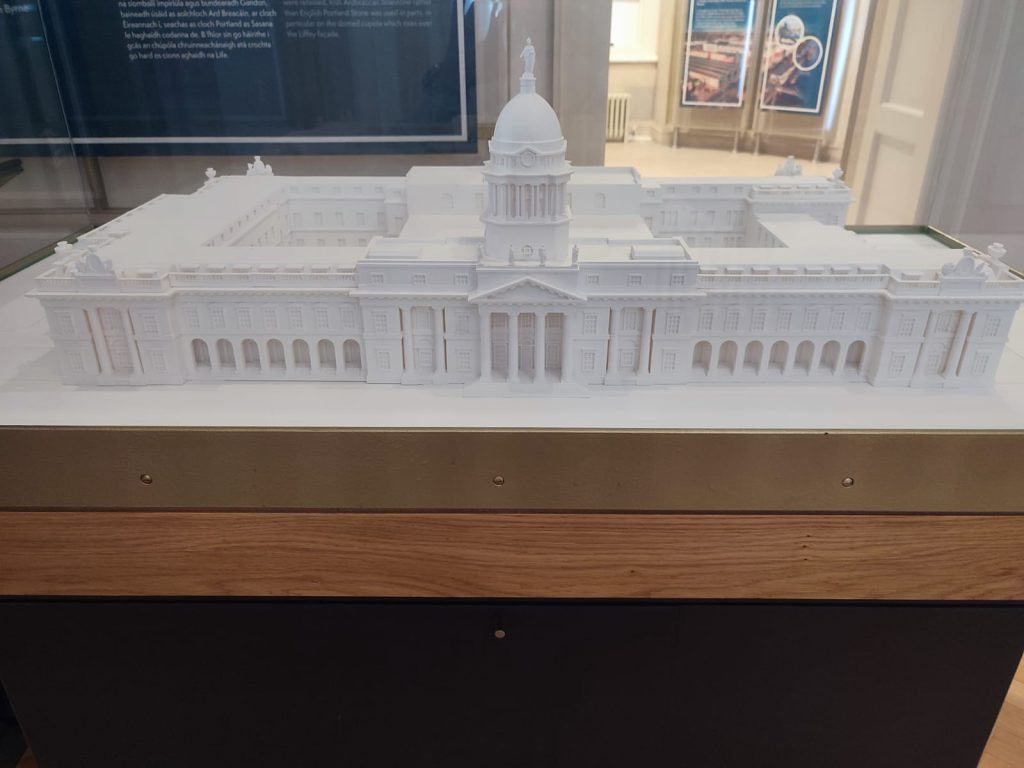
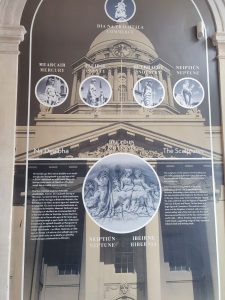 The Custom House sits on the north bank of the River Liffey, near central Dublin. As you approach, its grand neoclassical facade immediately catches your eye. It is both impressive and elegant, symmetrical and balanced, adorned with detailed sculptures that represent the Irish rivers. The building’s size and symmetry expressed British imperial authority when it was built. Today, it symbolizes resilience and historical change.
The guided tour of the Dublin Custom House was professional and well-organized, offering a vivid journey through the building’s history as we moved from room to room.
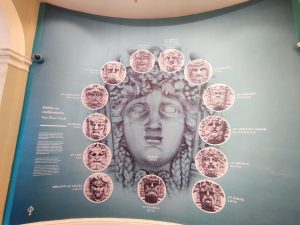
Our guide, a knowledgeable and enthusiastic heritage officer, started explaining the main entrance. With humor, clarity, and passion, they also explained the broader historical context: the British government’s intention to assert imperial control over Ireland in the late 18th century.
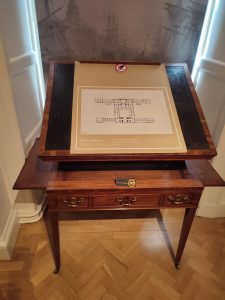
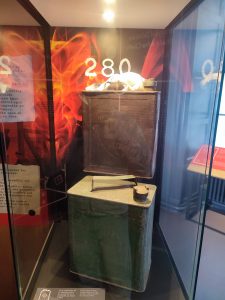
 The story began with the building’s commissioning in 1781 when architect James Gandon was brought to Ireland by John Beresford, the first commissioner of revenue. Beresford envisioned a monumental public building to house the customs offices, symbolizing British control over Irish trade and taxation. The original stand he used to draw the buildings project is also displayed in one of the rooms. The guide helped us envision the political climate of the time, noting how controversial it was to move the customs offices further downstream along the River Liffey, due to the corruptin of some political fugures. Howevr, most merchants supported the move since congestion in the river meant it took them days to reach the old custom house, causing many of their products to spoil.
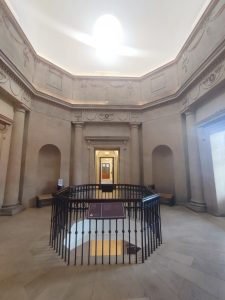
As we entered, the guide took us through key areas such as the central Rotunda, the Commissioners’ Room, and the varous custom offices. They explained how the Custom House was built on marshy ground, requiring thousands of timber piles to be driven deep into the earth, a remarkable engineering achievement for its time. The foundation work alone took over a year, and the guide detailed how this accomplishment allowed the rest of the building to rise in perfect symmetry, featuring colonnades, richly decorated pediments, and a magnificent central dome. The stones used in construction were sourced from across Ireland: granite from Wicklow and Portland stone for the ornate carvings.
Interestingly, our guide noted that Gandon insisted on using local materials and Irish craftsmen whenever possible. While this may seem contradictory for a building meant to symbolize British power, it also subtly highlighted Irish skill and resources, perhaps hinting at an early sense of national pride and cultural independence. This perspective added depth to the tour, prompting us to reflect on the building’s complex symbolism.
One highlight was learning about the 11-tonne statue of Commerce sitting on top of the dome. The guide described the dome as an engineering marvel, designed not only for aesthetic beauty but also to support the weight of this huge sculpture. It represents an allegorical figure of trade and economic strength. Despite modern Dublin’s shifting skyline, this dome remains one of its most recognizable landmarks.
 Inside the building, we observed where customs officials, merchants, and revenue officers once worked. The guide described how the Custom House operated as a busy administrative center where all imports and exports were logged and taxed, serving as a critical part of the British Empire in Ireland. They stressed that the building was more than just an office; it was a tool of colonial power and economic control.
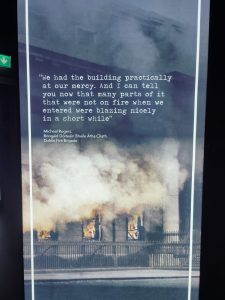 As we moved through the rooms, we could see the effects of the 1921 IRA attack. In the Rotunda and archive areas, the guide showed us scorch marks left by the fire and explained how the building was intentionally set ablaze during the Irish War of Independence to disrupt British operations. Much of the interior was destroyed, along with decades of tax records. However, thanks to Gandon’s original architectural drawings, restoration workers in the 1920s and later were able to rebuild much of the interior, preserving both the structure and its legacy.
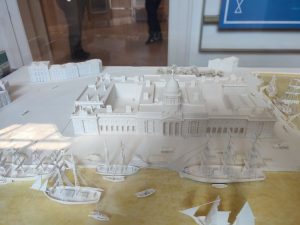
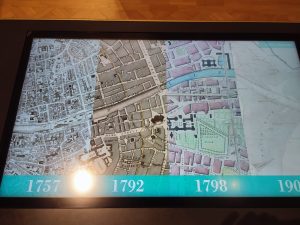
 The tour included 3D phisical models of the building and interactive multimedia displays, featuring a captivating digital map that compared Dublin’s city center before and after the Custom House’s construction. These visuals made us understand more easily the building’s history. The exhibits also showcased short films, original documents, and personal accounts from that time, making the experience even more engaging.
 In conclusion, our tour went very well as the guide made us understand easily even the most complex informations. We personally think that this experience is adapt fo evereyone, from children to elderly people, even for large groups. Visiting this monument makes people understand all the struggles that Ireland passed through during its recent history from the economy to the politics.
